

Lutsk delegation participates in international conference within the project “Wild life in a big city”
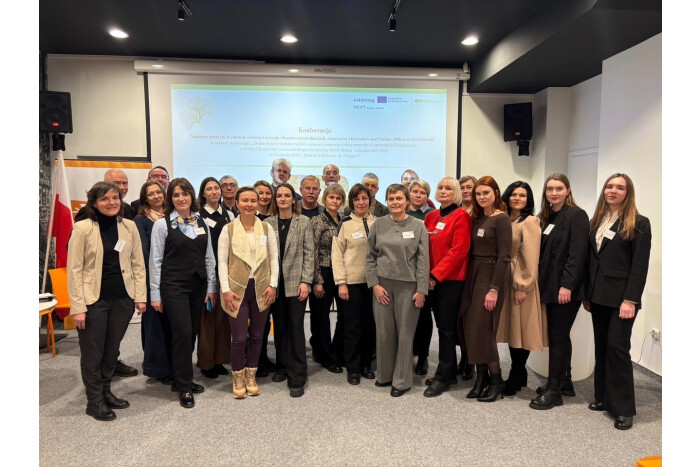
The conference “Best practices for the conservation and development of natural sites, reserves, and Natura 2000 and Emerald Network areas” was held on 27 November 2025 at the Urban Lab venue in Rzeszów (Republic of Poland) as part of the project “Wild life in a big city: protection and promotion of wild nature and biodiversity in Lutsk and Rzeszów.”
The purpose of the event was to exchange experience and enhance the professional competencies of specialists in the conservation and development of natural sites, reserves, and Natura 2000 and Emerald Network sites.
More than 60 participants attended the conference, including 20 representatives from Lutsk and 40 from Rzeszów: specialists in urban green space management, municipal administration employees, researchers, and experts in nature conservation.
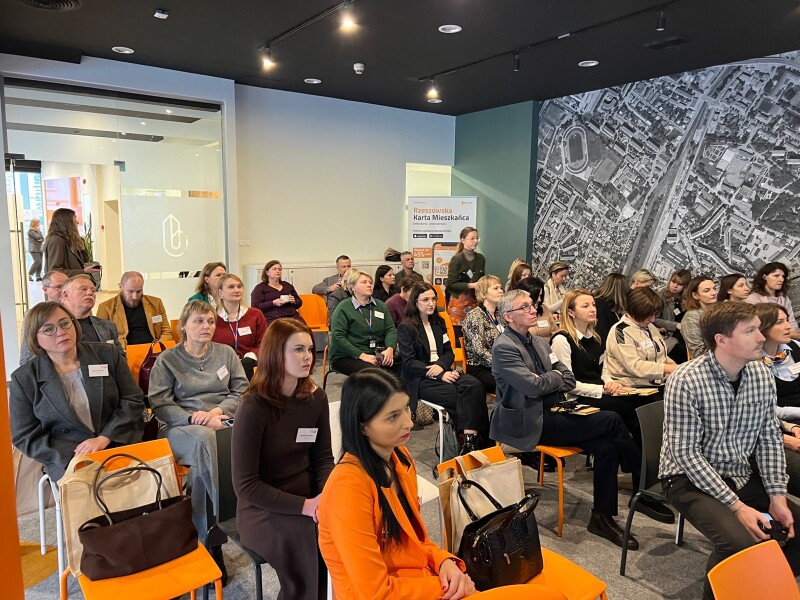
Welcome remarks were delivered by Andrzej Słodki, Head of the Joint Secretariat of the Interreg NEXT Poland–Ukraine Programme 2021–2027, and Krzysztof Stańko, Deputy President of the City of Rzeszów.
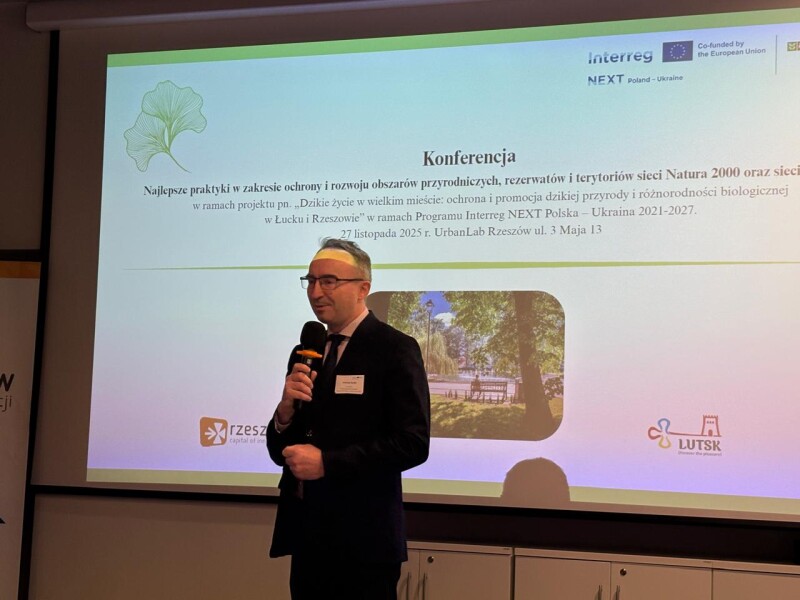
During the conference, participants had the opportunity to listen to a series of presentations by Ukrainian and Polish experts, become acquainted with best practices in the protection of natural areas, care for veteran trees, control of invasive plant species, development of green spaces, and the ecological transformation of urban environments.
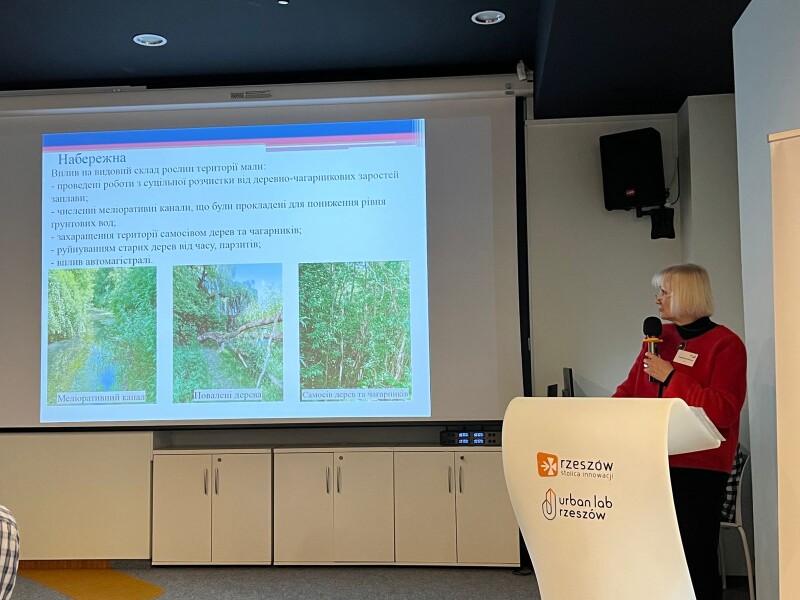
Pavlo Savchuk, Senior Specialist of the Department of Ecology of Lutsk City Council, explained in detail the uniqueness of the “Hnidavske boloto” (Gnidava Swamp) as an important element of the Emerald Network of the Lutsk City Territorial Community, emphasizing its conservation value. In her presentation, Kateryna Sukhomlyn, professor, Doctor of Biological Sciences at Lesya Ukrainka Volyn National University, presented a scientific analysis of the state of biodiversity in the floodplain of the Styr River within Lutsk and outlined the key factors influencing the preservation of this natural complex.
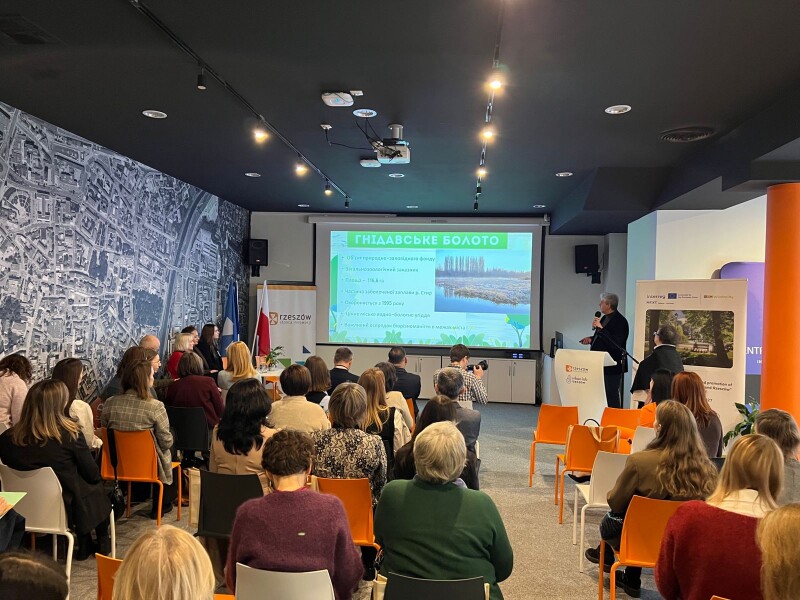
Following the Ukrainian speakers, representatives of the Municipality of the City of Rzeszów delivered their presentations. Magdalena Wilanowska-Gawron from the Department of Climate and Environment shared experience in implementing conservation and educational activities within the project “Wild life in a big city: protection and promotion of wild nature and biodiversity in Lutsk and Rzeszów,” demonstrating how environmental education can change residents’ attitudes toward urban wildlife. Katarzyna Strojna presented Rzeszów’s approaches to the green transformation of urban space and the integration of environmental solutions into municipal policy. Mateusz Kędzior, an inspector from the Municipal Greenery Authority, shared practical fundamentals of tree inspection, describing methods for assessing their condition and safety. Anita Poradowska, PhD, focused on the issue of invasive plant species and their impact on urban ecosystems. Dr Eng. Piotr Tyszko-Chmielowiec presented a comprehensive approach to the care of veteran trees, explaining the specifics of their diagnosis and conservation. In conclusion, Dr Eng. Arch. Anna Sołtysik shared experience in designing pocket parks in Kraków, in particular highlighting the role of small architectural forms and the division of functional zones in creating modern, environmentally balanced urban spaces.
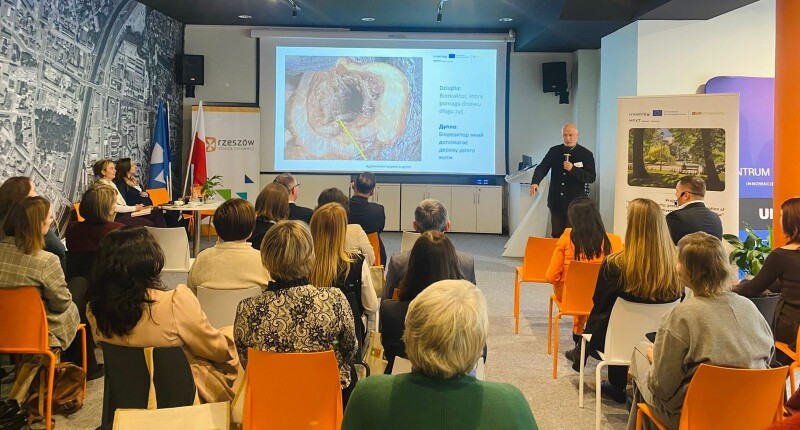
The event became another step in strengthening cooperation between Lutsk and Rzeszów in the field of nature conservation and the development of urban green areas. The knowledge gained and contacts established will facilitate the further implementation of joint solutions based on scientific approaches and the practical experience of both cities.

The project “Wild life in a big city: protection and promotion of wild nature and biodiversity in Lutsk and Rzeszów” is being implemented by the Executive Committee of Lutsk City Council in cooperation with the Municipality of the City of Rzeszów within the framework of the Interreg NEXT Poland–Ukraine Programme 2021–2027 and is co-financed by the European Union.
Conference proceedings:
Department of International Cooperation and Project Activities